Side Projects
Side projects
Products I've built, tested, and sold alongside school, and what the numbers taught me.
Kazzi Soda
Turning a growing drink trend into a physical product
About the project
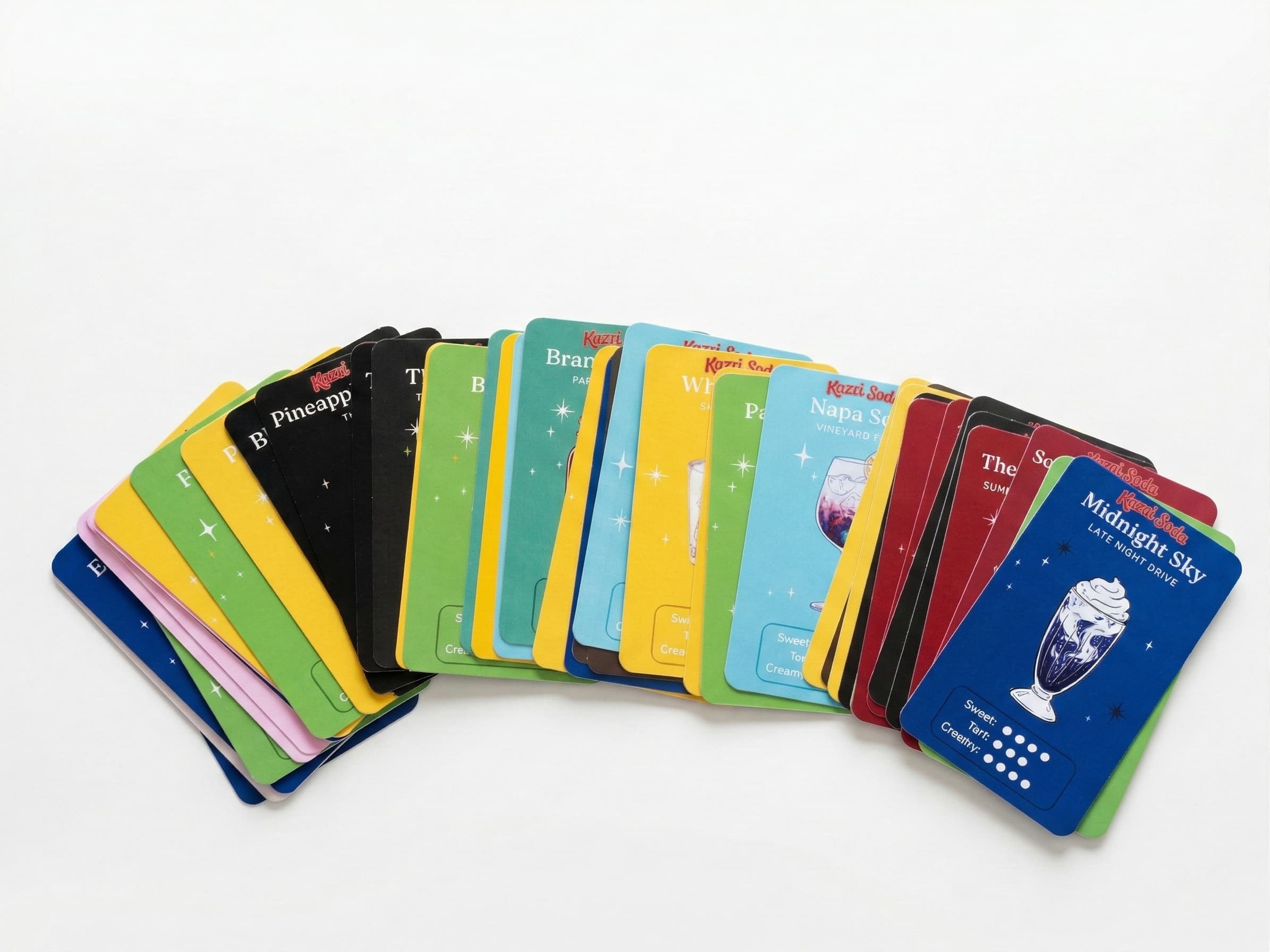
I noticed that cocktail enthusiasts had recipe cards, but dirty soda lovers didn't. Seeing an opportunity to bring the same concept to a growing drink category, I designed Kazzi Soda: a physical deck of dirty soda recipes made for experimenting with flavors at home.
I took the idea from concept to production, sourced manufacturers, calculated unit economics, and built an organic content strategy to introduce the product to customers.
- Role
- Entrepreneurship · Product Design · Sourcing · Marketing
- Type
- Consumer Product · E-commerce
Bring cocktail culture to dirty soda
I saw an opportunity to make dirty soda recipes more accessible through a physical product. Inspired by cocktail recipe decks, I designed a collection of cards that made discovering and recreating drink combinations simple and fun.
Design, sourcing, and unit economics
I designed the complete recipe deck and sourced manufacturers for both the cards and their holders. Finding the right supplier meant comparing pricing, production options, and minimum order quantities.
I ultimately found a manufacturer willing to produce an initial run of just 50 units. I calculated unit economics across manufacturing, shipping, packaging, and selling price to understand the costs and viability of the product.
The finished product launched at approximately $25 per deck, available through Etsy and my own website.
52 videos, one distribution strategy
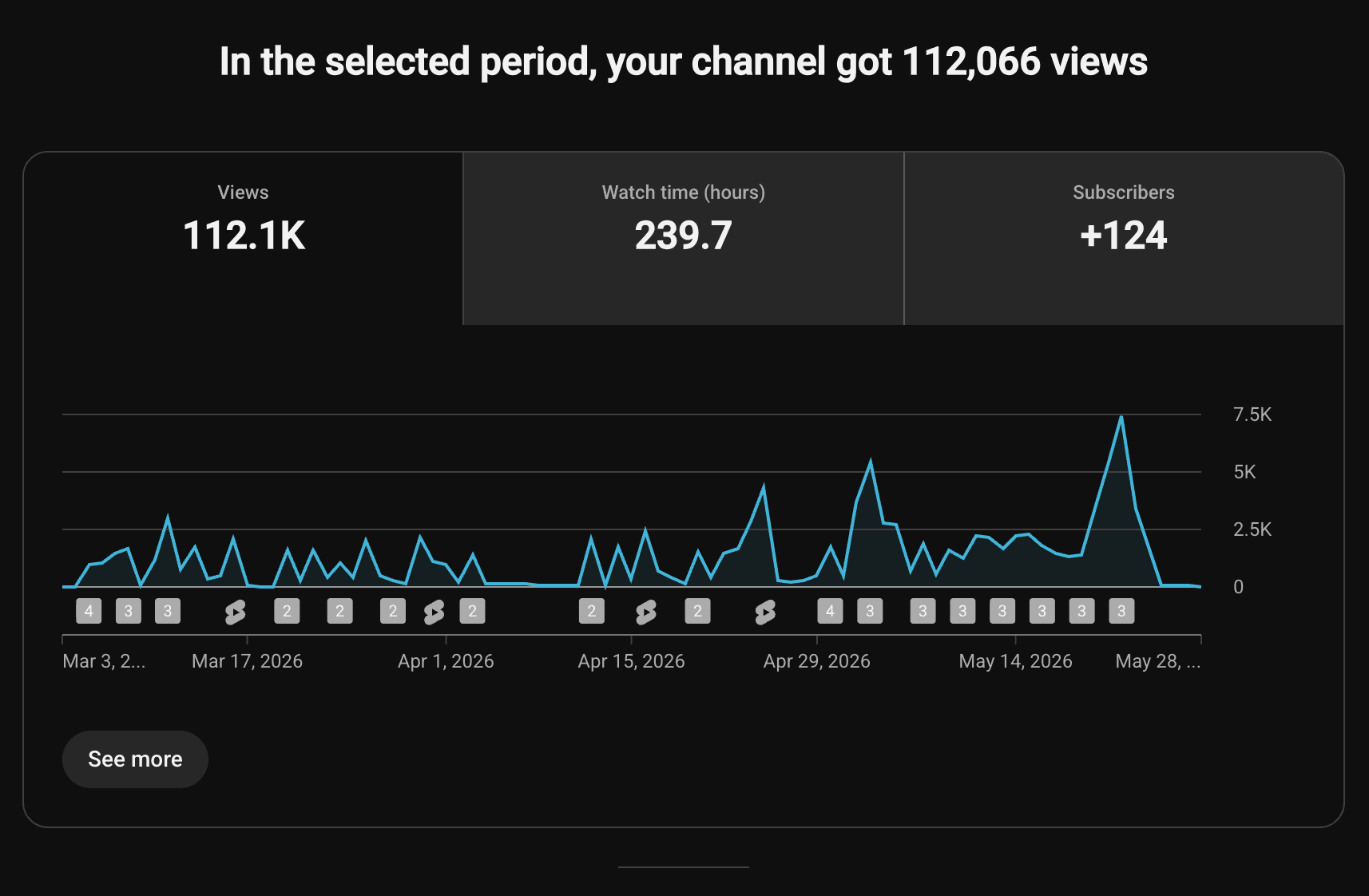
I created 52 short-form videos demonstrating recipes from the deck, filming and publishing content across TikTok and YouTube.
Rather than relying on a single format, I experimented with hooks, on-screen text, background music, and video styles. I found that strong opening hooks and seamless loops tended to perform better, while energy-drink-related content often attracted more views on TikTok.
From attention to sales
The videos generated more than 170,000 views across TikTok and YouTube. Combined with Etsy and website sales, the initial launch generated five sales from the first 50-unit production run.
Although views haven't translated into consistent sales yet, the experiment gave me firsthand experience testing content, identifying engagement patterns, and evaluating the gap between attention and purchase intent.
Understanding the gap between views and revenue
Kazzi Soda is still available for purchase, and the business remains a work in progress.
Building Kazzi Soda taught me how to evaluate a product opportunity, manage manufacturing trade-offs, calculate unit economics, and test marketing strategies with real customers.
The next challenge is improving conversion: turning content engagement into purchases and finding a repeatable way to grow the business.
Tokyo Treasures
Finding underpriced products, testing demand, and expanding into new categories since 2020
About the project
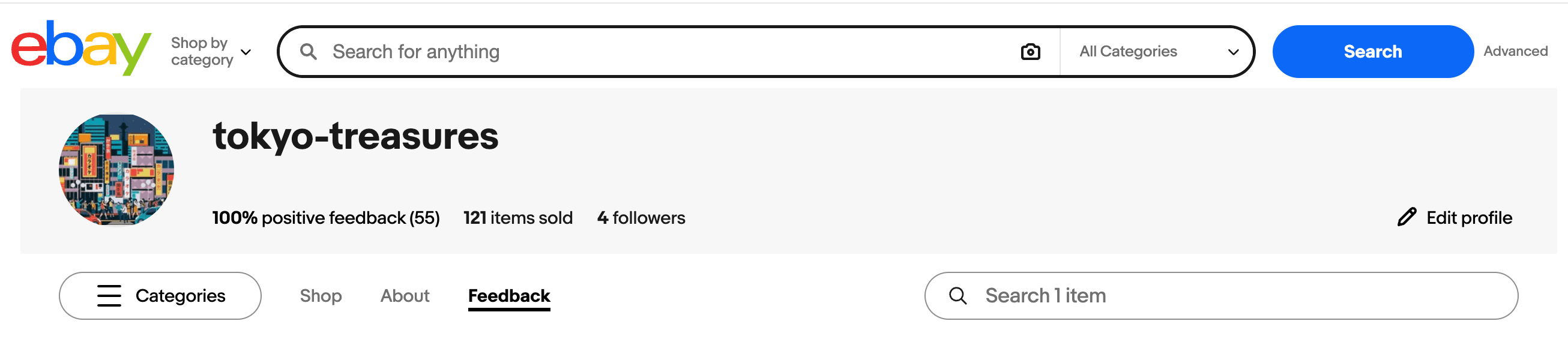
I started Tokyo Treasures in high school during COVID. I had nothing but free time and wanted to make the most of it and earn money, so I looked for products I could buy for less than they were worth and resell. Over the next few years it grew from a single idea into three product lines, with more than $9,600 in total sales.
- Role
- Sourcing · Pricing · Product Selection · Operations
- Type
- Reselling · E-commerce (eBay)
- Results
- $9,600+ in total sales · 119 orders · 113 buyers · 100% positive reviews
LEGO sets
I saw an opportunity in buying and reselling LEGO sets. It was my first test of whether I could consistently find products priced below what buyers would pay. I sold 23 sets, averaging about $92 each.
Pokémon cards and PSA grading
I expanded into Pokémon cards by buying underpriced ones, sending the best to PSA for grading, and selling them. I had researched the market and knew that highly graded cards can command much higher prices, and I checked my cards were in excellent condition before paying to grade them.
To price each card, I looked at what the same card had recently sold for and priced mine in line with those sales. The grading bet paid off: my 16 PSA-graded cards averaged about $126 per sale, compared with about $16 for ungraded cards. The top sale was a PSA 9 Charizard for $549.99.
Buying in Japan, selling in the United States
I then expanded to items I bought secondhand in Japan, looking for things that would sell for more in the United States than they cost in Japan. This phase was my busiest: 2024 was my highest-volume year, with 50 sales across Japanese video games, anime figures, collectibles, and more.
What I learned
Tokyo Treasures taught me to validate demand with real sales data before setting a price, to decide what to buy based on what has already worked, and to keep customers happy while the product mix changes. Each new category started with a small test, and I kept the ones that worked.
Next
Let's work together.
I'm looking for product management internships and full-time roles where I can build close to users and ship fast. If that's the kind of work you're hiring for, I'd love to talk.