Case Study
Junbi
Making studying fit into students’ pain points
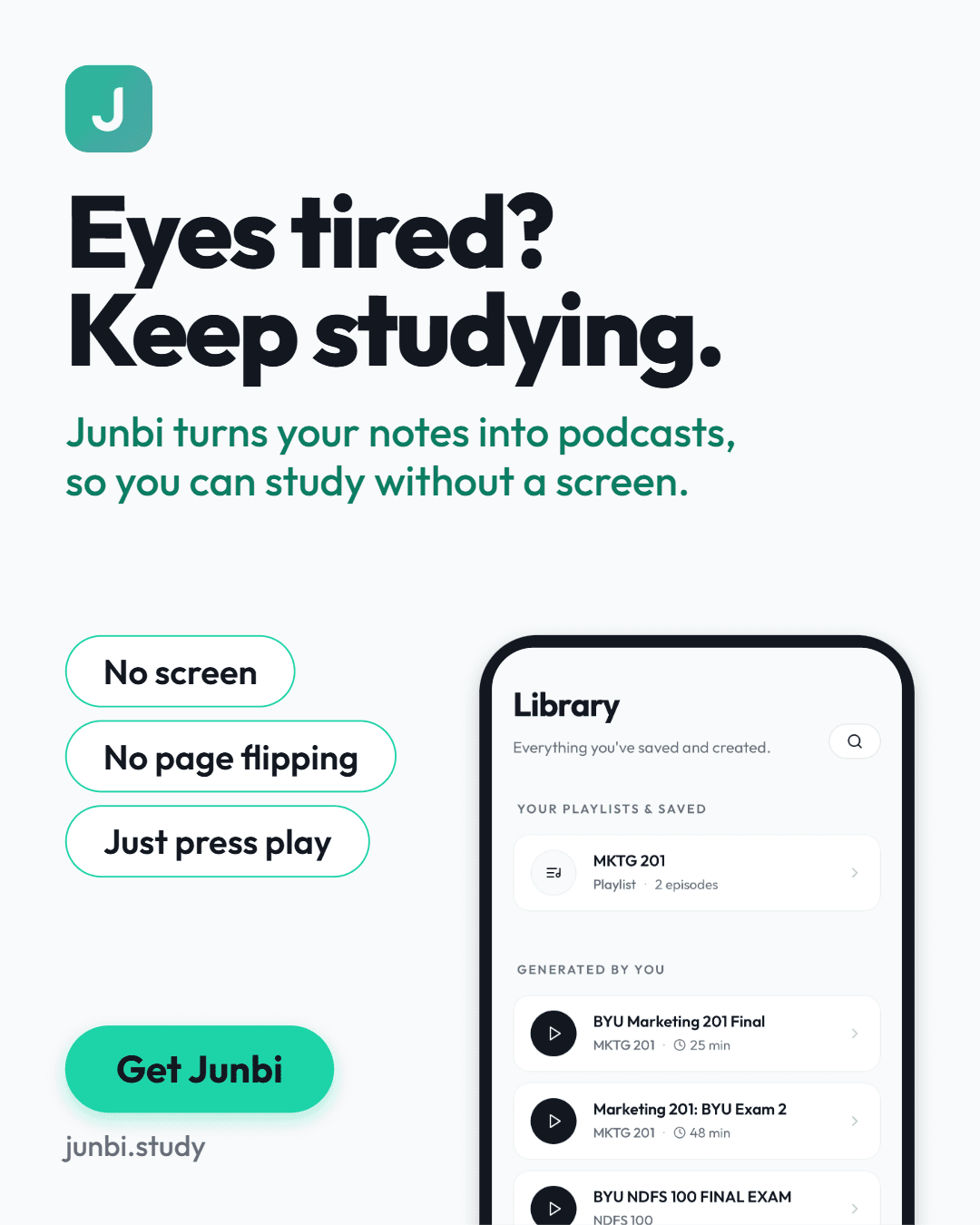
I solo-built Junbi, a platform that turns notes and flashcards into podcasts students can use while walking, commuting, or working out.
I built it because I realized that podcasts are becoming more and more popular, and students like me wanted to be able to study while they couldn't look at a screen.
- Role
- Solo Founder & Builder
- Built at
- BYU Sandbox startup incubator
- Dates
- January 2026–Present
01
Finding the problem
- Most study tools assume students are sitting at a desk with their eyes on a screen.
- I saw an opportunity to make review useful during commutes.
- I built the entire website, app, and AI pipeline using SQL, Cursor, Supabase, Xcode, and Vercel.
02
Learning from failure
- My first launch brought in almost no sign ups.
- I tested whether the issue was the product or how I introduced it.
- I simplified the UX, made it free, and created class-specific podcasts from students’ own material.
- Running a hyper specific targeted market campaign with relevant flyers made all the difference.
03
Redesigning around users
- People signed up but often didn’t find Junbi’s main feature.
- I used their feedback to rebuild the interface, move the core action into focus, and remove steps that got in the way.
04
Growing with a $30 budget
- Junbi reached 4,400+ active users, 800+ registered accounts, and students at 100+ universities off of only $30 of marketing.
- I brought on a collaborator to lead campus distribution, and helped secure a $500 local grant.
4,000+
Active users
700+
Registered accounts
50+
Universities reached
$0.05
Cost per acquisition
$30
Marketing budget
$500
Local grant
05
Pitching Quizlet
- I pitched Junbi to Quizlet’s CFO with product metrics and a proposal for how Junbi could complement Quizlet’s study tools.
- Quizlet passed, and a few months later, it launched its own podcast feature.
06
What I learned
- 01
Ship, then observe. User behavior showed me where my assumptions were wrong and what to improve.
- 02
Distribution is part of the product. A focused $30 campaign taught me how much reach shapes whether a product gets used.
- 03
Treat low signups as feedback. A failed launch gave me a clear reason to test a different approach.
- 04
Bring in the right collaborator. Sharing ownership of distribution gave me more room to build.
Next
Let’s work together
I’m looking for product management internships and full-time roles where I can work close to users, make thoughtful product decisions, and ship quickly. If that sounds useful to your team, I’d love to talk.